Shanghai Superconductor Successfully Hosts"2018 Shanghai High-Temperature Superconductor Conference"
2018-08-16
On August 15 to 17, 2018, the “Shanghai High-Temperature Superconductor Conference 2018” (ShHTS 2018) was held at the Xing Guo Hotel in Shanghai. Co-hosted by Shanghai Jiao Tong University (SJTU) and Shanghai Superconductor Technology Co., Ltd. (Shanghai Superconductor), and co-organized by the Cryogenic Association of Japan (CSSJ), the conference attracted nearly a hundred experts, scholars, and industry professionals from the global superconductivity field. Attendees included recipients of China’s National Recruitment Program of Global Experts, National Science Fund for Distinguished Young Scholars laureates, and members of the US National Academy of Sciences. Participants discussed the latest research achievements and future industrial development directions in high-temperature superconductivity, exchanging views on long-term strategies for the industry’s growth.
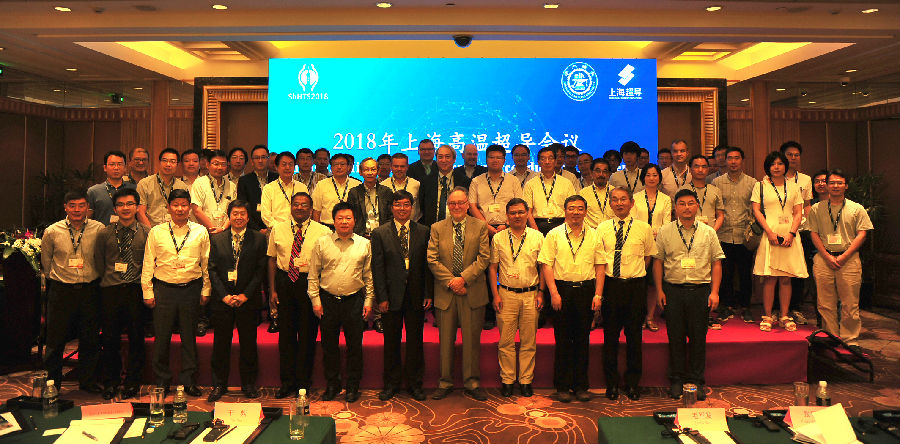
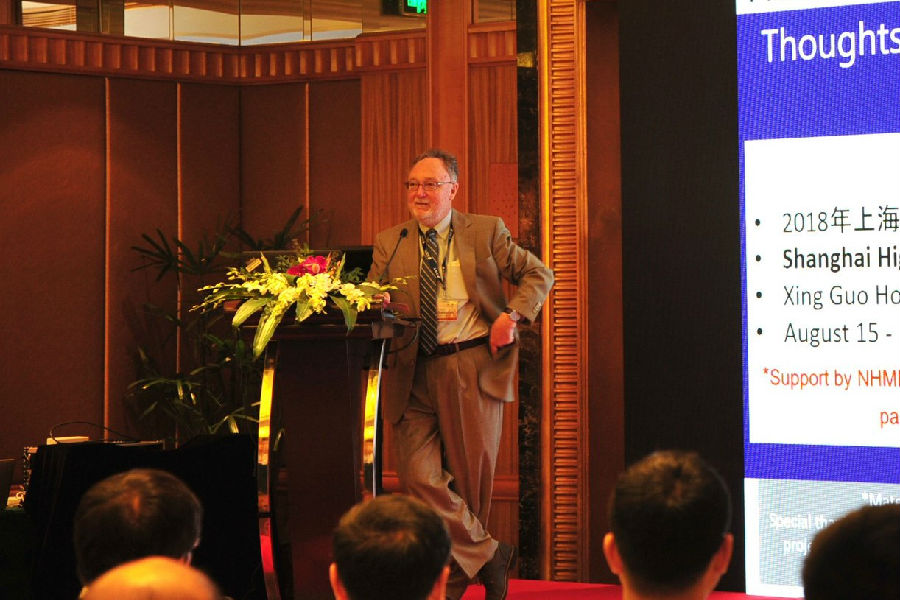
Scene from the 2018 Shanghai High-Temperature Superconductor Conference
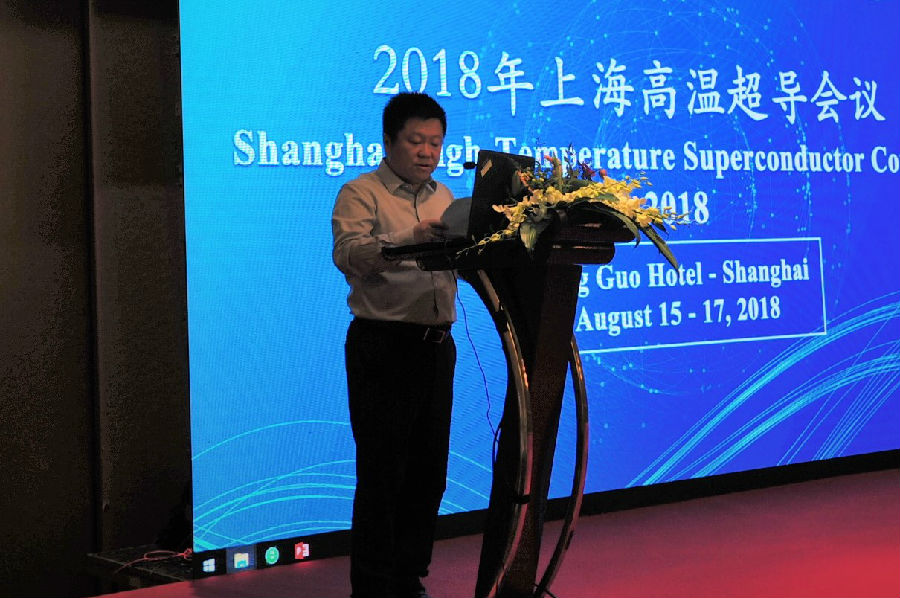
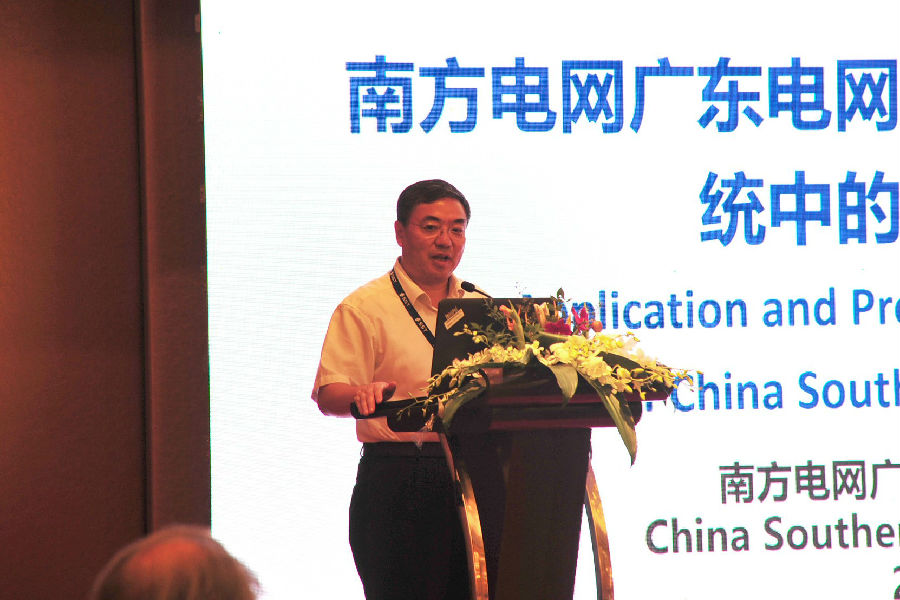
Gan Pin, Deputy Director of the Shanghai Municipal Science and Technology Commission, and Mao Junfa, Academician and Vice President of Shanghai Jiao Tong University, delivered opening speeches. Gan Pin highly commended the positive significance of superconductor technology for accelerating the construction of Shanghai’s Science and Innovation Center. He emphasized that the Commission would continue to support collaboration among industry, academia, and research, as well as across the superconducting supply chain. Leveraging major demonstration projects like the kilometer-level superconducting cable, Shanghai aims to solidify and strengthen its superconductor industry, enhancing the influence of the "Shanghai Manufacturing" brand. Academician Mao Junfa stated that SJTU places high importance on HTS, having consolidated resources to establish the SJTU Superconductor Joint Research Institute. SJTU maintains strong collaboration with Shanghai Superconductor and will expand cooperation with domestic and international partners to jointly advance the industry. Professor David Larbalestier from the US National High Magnetic Field Laboratory presented a report envisioning the application of HTS materials in low-temperature, high-field magnets and future research directions. Duan Xinhui, Director of the Technology Department at Guangdong Power Grid Company, reported on recent progress in projects like superconducting cables and fault current limiters, outlining their application prospects in future power grids. Professor Zhang Pingxiang, President of the Northwest Institute for Nonferrous Metal Research, presented on China’s progress in developing practical HTS materials. He also discussed application prospects in high-end medical equipment and low-temperature/high-field devices, along with advancements in new HTS materials.
In recent years, China has achieved a series of major breakthroughs in HTS. REBCO superconducting materials have matured and achieved stable mass production. Companies like Shanghai Superconductor have independently developed and localized core production equipment. Entities including State Grid Corporation of China, China Southern Power Grid, the Chinese Academy of Sciences (CAS), China Aerospace Science and Industry Corporation (CASIC), and CRRC Corporation have initiated multiple industrial application research and validation projects for HTS products. China's HTS industrial chain is maturing, with supporting equipment manufacturers (like cryogenic cooling systems) exploring localization, laying a crucial foundation for the industry’s healthy development.
As China’s first supplier capable of mass-producing second-generation (2G) high-temperature superconducting tapes (wires), Shanghai Superconductor has made significant progress in HTS applications. It has partnered with over a dozen research institutions and enterprises, including State Grid, China Southern Power Grid, CASIC, CRRC, the Institute of Electrical Engineering (CAS), the Institute of High Energy Physics (CAS), China National Nuclear Corporation, and Dongfang Electric Corporation. Collaboration spans projects such as superconducting cables, fault current limiters, superconducting fusion, particle accelerators, maglev trains, and superconducting magnets. Professor Hong Zhiyong, Vice President of Shanghai Superconductor, stated that this conference holds great significance for HTS industrial development. He expressed confidence that, driven by the Shanghai Municipal Government, the Science and Technology Commission, SJTU, and experts and scholars worldwide, HTS applications will flourish across China, significantly accelerating the industrialization process.