Shanghai Superconductor Makes a Dazzling Appearance at the National "12th Five-Year Plan"Science and Technology Innovation Achievements Exhibition
2016-06-10
From June 1 to 7, 2016, the National “12th Five-Year Plan” Science and Technology Innovation Achievements Exhibition (hereinafter referred to as the Exhibition) was held at the Beijing Exhibition Hall. Jointly organized by the Ministry of Science and Technology, the National Development and Reform Commission, the Ministry of Finance, and the Equipment Development Department of the Central Military Commission, the Exhibition showcased the significant progress and achievements made in China's science and technology innovation over the past five years. It was attended by President Xi Jinping, Premier Li Keqiang, and other members of the Political Bureau Standing Committee, leaders of the Central Military Commission, heads of various ministries and commissions of the State Council, leaders from provinces and municipalities directly under the Central Government, academicians of the Chinese Academy of Sciences and the Chinese Academy of Engineering, and representatives of the China Association for Science and Technology. The high-profile attendance highlighted the nation’s strong emphasis on science and technology innovation.
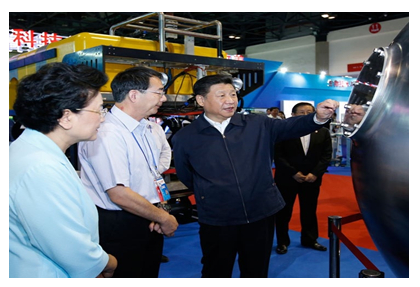
The scientific and technological achievements showcased this time can be described as a blossoming of a hundred flowers. They include not only the “national treasures” such as the “Tiangong-1” space lab, the Beidou Navigation System, and the FAST (Five-hundred-meter Aperture Spherical radio Telescope), but also new technologies closely related to people's daily lives, such as integrated circuit manufacturing technology, research progress on future 5G, anti-tumor drugs, and new high-temperature superconducting materials. As a strategic emerging high-tech enterprise that was a key focus for cultivation in Shanghai during the “12th Five-Year Plan” period, Shanghai Superconducor was invited to participate in this exhibition, and it has generated a strong response. On the evening of May 31, the day before the exhibition opened, Wan Gang, Minister of Science and Technology of China, along with Deputy Ministers Hou Jianguo and Li Meng, were invited to experience the “magic” of superconducting technology on site first: A superconductor, cooled by liquid nitrogen, smoothly levitated above a permanent magnet track and rotated at high speed in the direction of the track. Peng Chuyao, the Director of the Sales Department of Shanghai Superconductor, introduced to Wan Gang that this is the fundamental principle of the future superconducting levitation low-altitude train, which will have a speed exceeding that of airplanes. Its core is the second-generation HTS tape (wire), which has now entered the stage of large-scale industrialization.
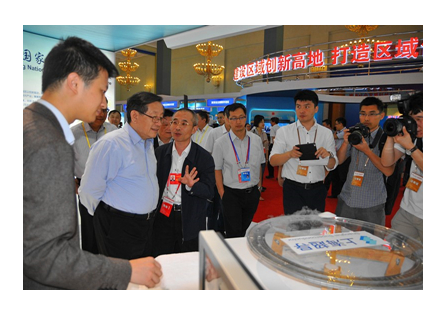
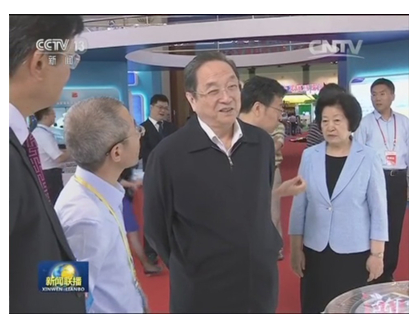
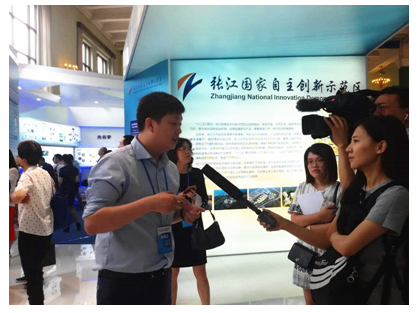
During the exhibition, several senior leaders visited the booth of Shanghai Superconductor for inspection. These leaders included Yu Zhengsheng, a member of the Standing Committee of the Political Bureau of the CPC Central Committee and chairman of the 12th National Committee of the Chinese People's Political Consultative Conference (CPPCC); Li Jianguo, a member of the Political Bureau of the CPC Central Committee, vice chairman of the Standing Committee of the 12th National People's Congress (NPC), and chairman of the All-China Federation of Trade Unions; Sun Chunlan, a member of the Political Bureau of the CPC Central Committee and minister of the United Front Work Department of the CPC Central Committee; and Ailigen Yimingbaihai, vice chairman of the Standing Committee of the 12th NPC and director of the Standing Committee of the Xinjiang Uygur Autonomous Region People’s Congress. They engaged in in-depth discussions on the future development direction of superconducting technology and highly commended the achievements of Shanghai Superconducting Technology. In addition, during the exhibition period, numerous media outlets visited and reported on the company's booth, including Xinhua News Agency, CCTV’s Finance Channel, Beijing Television, Beijing Youth Television, Beijing Morning Post, and China Radio International, among others. Notably, the CCTV News Broadcast team reported on Yu Zhengsheng’s inspection of the company’s booth.
Shanghai Superconductor was established in 2011, focusing on the R&D as well as the production of second-generation high-temperature superconducting tapes (wires) (YBCO). Through its self-designed and manufactured production lines, the company has achieved stable mass production of high-performance and cost-effective superconducting tapes (wires). These tapes (wires) feature excellent performance in low-temperature and strong magnetic fields (with a current density of >1000 A/cm² at 4.2 K and 12 T), customized tape (wire) encapsulation processes, and ultra-low resistance joints (<25 nΩ·cm²). Currently, the second-generation HTS tapes (wires) have a wide range of applications, including power grids, new energy, high-speed transportation, military applications, basic industries, and large scientific instruments.
Superconducting Low-Altitude Train
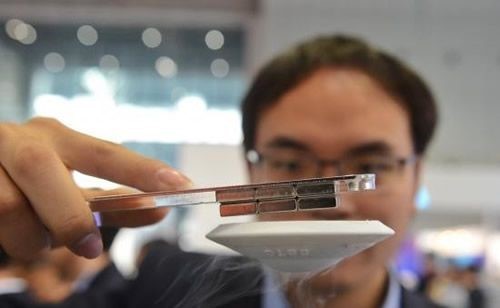
The “flying saucer” emitting “white smoke” in the picture is stably hovering beneath the magnetic track. This is because we have woven our self-produced second-generation high-temperature superconducting tapes (wires) into small, thin pieces and placed them inside a plastic casing. By cooling the flying saucer with liquid nitrogen, the superconducting material inside enters a superconducting state, acquiring complete diamagnetism and quantum locking capabilities. This enables the flying saucer to hover in either the upward or downward direction and travel rapidly along the track. Scientists are currently applying this principle to rail transportation to develop the future high-speed train—the superconducting low-altitude train. Since there is no friction with the ground, the superconducting low-altitude train is only affected by air resistance, allowing its speed to be 2 to 3 times faster than that of conventional high-speed trains. Currently, foreign scientists have already achieved a global record speed of 603 km/h in rail transit using this technology and began constructing the first commercial superconducting low-altitude train line between Tokyo and Nagoya in 2014. If, in the future, superconducting low-altitude trains could operate within vacuum tubes, their operational speed could potentially reach 2,000–3,000 km/h or even higher.
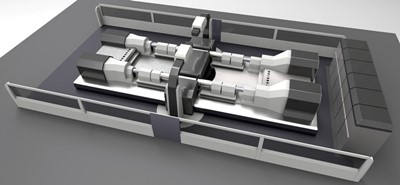
Superconducting Induction Heating Equipment
Superconducting cables are one of the optimal technological solutions for high-capacity power transmission. The new generation of superconducting cables can utilize YBCO coated conductors as the current-carrying layer. The current-carrying capacity of these superconducting cables is at least 5 to 10 times that of copper wires of the same size. Additionally, the power transmission losses are reduced by 70-80% compared to conventional cables. They are also environmentally friendly, with no electromagnetic or thermal radiation.
Superconducting Cables
Superconducting cables are one of the best technological solutions for high-capacity power transmission. The new generation of superconducting cables can utilize YBCO coated conductors as the current-carrying layer. Their current-carrying capacity is at least 5 to 10 times that of copper wires of the same size. At the same time, power transmission losses are reduced by 70-80% compared to conventional cables, and they are environmentally friendly, with no electromagnetic or thermal radiation.
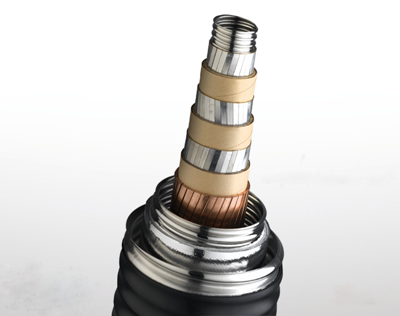
Superconducting Cable Display Model
Superconducting Motors
Compared with traditional motors, superconducting motors have energy losses of only about 20-30% of those of conventional motors. Their volume and weight are reduced by approximately 70-80%, while effectively reducing noise, extending self-sustaining capabilities, and saving operating costs. Superconducting motors can be applied in devices such as offshore wind power generation and ship propulsion.
Science and Technology Innovation Achievements Exhibition Site
The technological achievements of Shanghai Superconductor have been selected as a highlight project from Shanghai and showcased at the National "12th Five-Year Plan" Science and Technology Innovation Achievements Exhibition. This marks the significant contribution of the superconducting industry to promoting economic transformation and upgrading and driving supply-side structural reform during the "12th Five-Year Plan" period. As a leading domestic enterprise in the field of second-generation high-temperature superconducting tapes (wires), Shanghai Superconductor has been committed to the domestic development of the superconducting industry since its establishment in 2011. It has attracted a group of outstanding professionals in the industry and focused on the research and development of second-generation high-temperature superconducting tapes (wires) and their manufacturing processes. Within just five years, the company has evolved from following the research and development progress of countries like the United States and Japan to becoming a strong international competitor. It currently collaborates deeply with multiple research institutions, universities, and enterprises both domestically and internationally, providing a powerful driving force for the development of the superconducting industry.