Superconductivity Changes Life: Media Frenzy at the Industrial Expo – Don’t Miss the “Superconductivity Craze” or You’ll Be Out!
2015-11-20
The 17th China International Industrial Fair officially kicked off on November 3rd at the National Exhibition and Convention Center (Shanghai). This expo showcased numerous top-tier scientific and technological achievements of China in the fields of new energy, new materials, and advanced manufacturing. As the representative enterprise of the high-temperature superconductivity industry at this expo, the booth of Shanghai Superconductor was always bustling with people. The “superconductivity craze” sparked by a series of cutting-edge superconducting products was further amplified by media coverage, sharing the excitement inside the venue with an even broader audience.
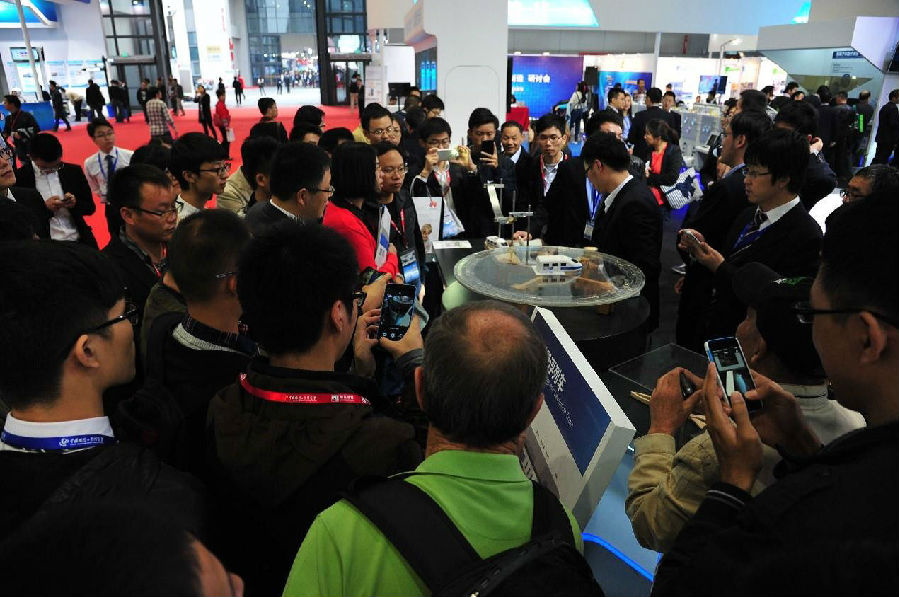
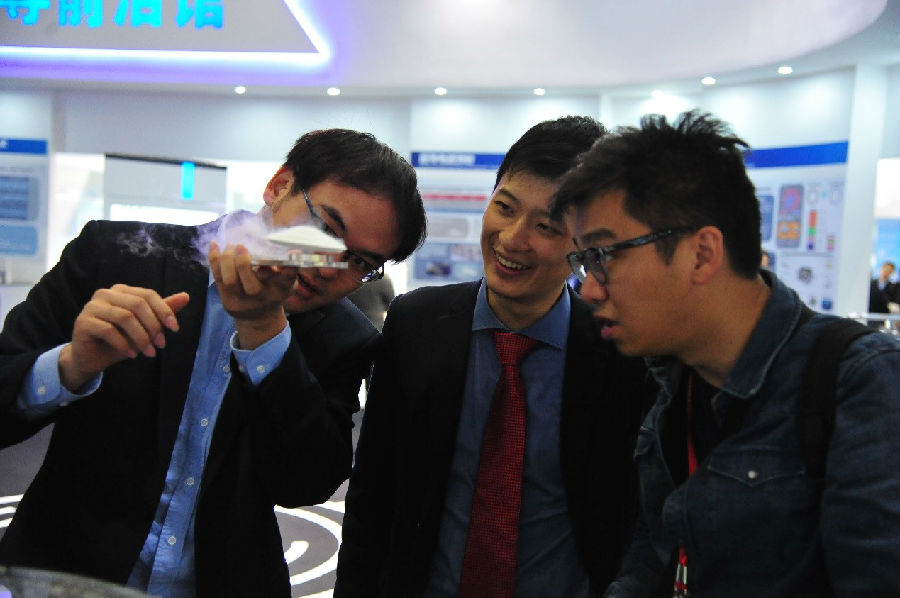
As soon as visitors entered the Superconductivity Frontier Pavilion in Hall 6.2H, they were drawn to the “superconducting magnetic levitation” booth, where a “flying saucer” appeared to be floating and “running” in circles on a transparent disc half a meter in diameter, with what seemed like misty clouds beneath it. This spectacle resembled something out of a sci-fi movie.
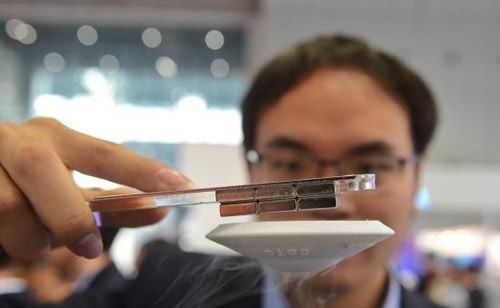
The reason the “flying saucer” can move so swiftly is that it contains a piece of second-generation high-temperature superconducting tape (wire) (YBCO). The superconducting layer in the tape (wire) is only one-thousandth to one-hundredth the thickness of a human hair. By cooling the superconducting tape (wire) with liquid nitrogen, which is even cheaper than bottled water, the tape (wire) can enter a superconducting state. Once in this state, the tape (wire) allows the model to levitate magically above a “track” made of permanent magnets.
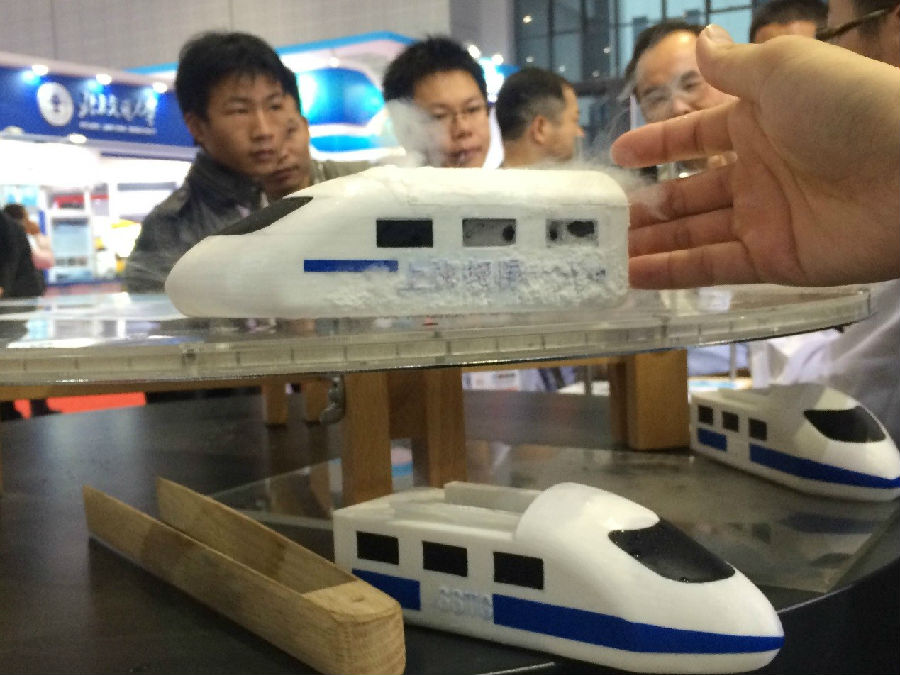
Currently, the superconducting maglev train developed by Central Japan Railway Company has reached a test speed of 603 kilometers per hour, making it the fastest high-speed rail in the world. The superconducting maglev railway from Tokyo to Nagoya officially began construction in 2014. What’s more astonishing is that in a low-pressure tube, a superconducting maglev train can achieve a speed of 1,500 kilometers per hour, with a theoretical maximum speed as high as 1,500 kilometers per hour.
This leads to an important question: Why can superconducting maglev trains achieve such “flying” speeds? And is it safe to travel at such high speeds?
Superconducting maglev trains utilize the complete diamagnetism of superconducting materials (the “Meissner effect”) to create repulsion with ground-based magnets, enabling the train to levitate. They then use the quantum locking properties of high-temperature superconducting materials to keep the train locked within the track. Once accelerated, the train can move forward with virtually no power required, and in a vacuum, it can achieve completely power-free travel.
Compared to traditional electromagnetic levitation, superconducting maglev technology can achieve higher levitation distances without electricity, making it safer, faster, and more energy-efficient. This technology is also the most promising direction for the future development of high-speed railways.
Superconducting Tape: Meeting Market Demand, Breaking Foreign Monopoly, and Leading International Standards
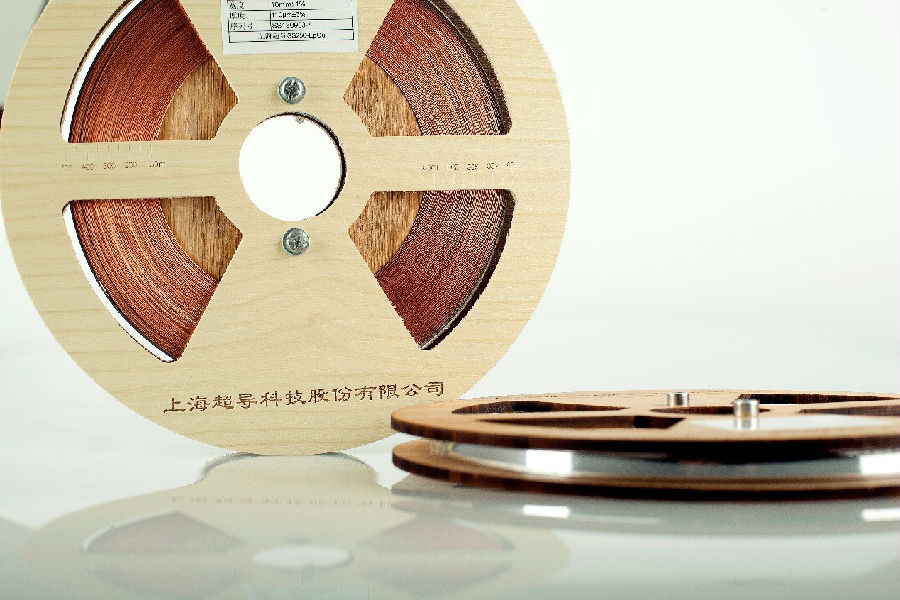
To build superconducting maglev trains, the most critical component is high-performance high-temperature superconducting material. After years of research and development, Shanghai Superconductor became the only domestic company to achieve batch production and sales of second-generation high-temperature superconducting tape (wire) (YBCO) in 2014, with complete independent intellectual property rights. This move effectively broke the monopoly held by the United States and Japan in this field.
Third-party assessment data shows that the second-generation high-temperature superconducting tape (wire) exhibited by Shanghai Superconductor at the expo outperforms the best international products by 25% in terms of performance under a magnetic field, while reducing the price by 30%. In addition, Shanghai Superconductor has independently developed a globally leading “ultra-low resistance tape (wire) joint technology,” achieving the world's lowest industrial joint resistance of 2.3 nano-ohms. This has accelerated the large-scale application and industrialization of second-generation high-temperature superconducting tape (wire).
It can be said that the second-generation high-temperature superconducting tape (wire) developed by Shanghai Superconductor is one of the few Chinese-developed technological products that lead the world.
Beyond "Future Trains": Where Else Can Superconducting Tapes Be Applied?
One example is the upgrade of power grids. Currently, high-voltage cables mainly made of copper are not only bulky but also have high energy losses. If superconducting cables are used, the zero-resistance property of high-temperature superconducting materials can significantly reduce transmission losses and increase the current-carrying capacity of cables several times over. Additionally, superconducting cables can be buried underground instead of being strung overhead, restoring the blue sky to cities. The transformation of superconducting power grids has already begun in the United States.
The aluminum extrusion industry is an energy-intensive sector. Traditional induction heaters use copper coils with industrial or medium-frequency alternating current to create a changing magnetic field inside the aluminum ingots, generating eddy currents that heat the ingots. However, the heating efficiency of such equipment is only around 40%, with shallow penetration depth. By applying superconducting induction heating technology, an efficient and stable direct current magnetic field can be generated using resistance-free superconducting coils, increasing heating efficiency to over 85% and significantly improving penetration depth, thereby enhancing the quality of metal workpieces.
This year, Shanghai Superconductor, in collaboration with the Chinese Academy of Sciences, successfully developed China’s first “superconducting induction heating device,” obtaining the world’s only authorized invention patent in the field of superconducting induction heating. Currently, the company has reached cooperation intentions with several aluminum processing enterprises.
n addition to the mentioned applications in power (superconducting cables, superconducting fault current limiters) and transportation (superconducting maglev), the second-generation high-temperature superconducting tape (wire) independently developed by Shanghai Superconductor can also be applied in the fields of energy (controlled nuclear fusion, superconducting induction heating, etc.) and medical (magnetic resonance imaging, etc.), contributing original strength to building a “Green China.”
Superconducting Production Line: The World’s Only One, Driving the Development of China’s High-End Manufacturing Industry
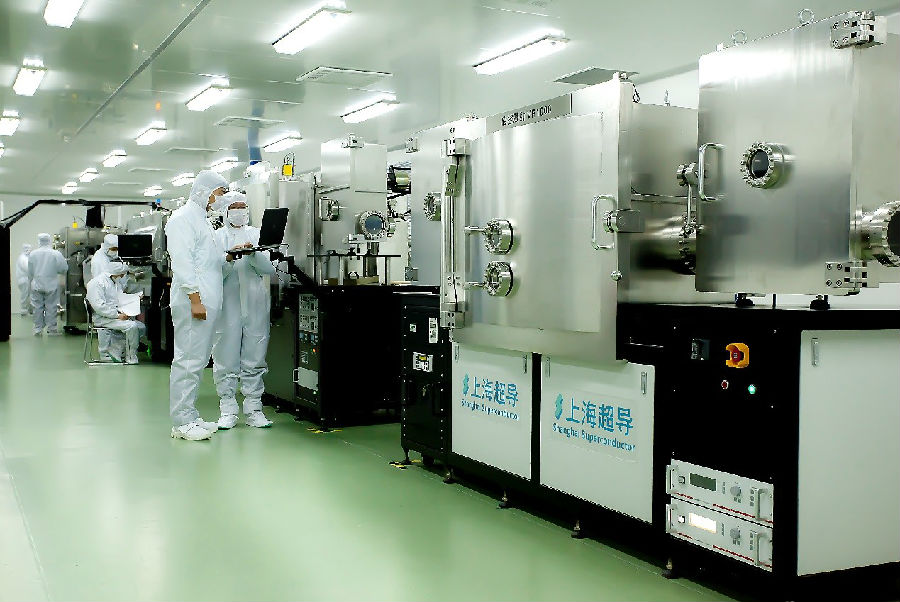
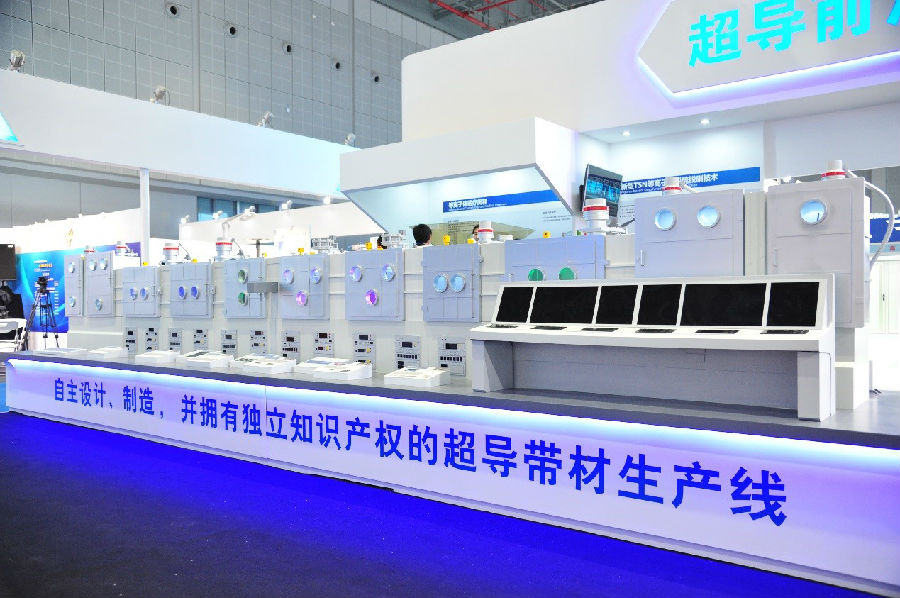
In 2014, Shanghai Superconductor independently designed and manufactured the world’s only “kilometer-level” second-generation high-temperature superconducting (YBCO) tape (wire) production line available for sale. This significantly improved the performance and cost-effectiveness of second-generation high-temperature superconducting tape (wire). The production line features high intelligence, high integration, and a combination of production and testing, capable of stably producing hundreds of kilometers of superconducting tape (wire).
How much superconducting production capacity and tape (wire) do we need?
The recent media buzz about China’s plan to build the world’s largest hadron collider between 2020 and 2025 is closely related to superconductivity. The principle of a hadron collider is to use high-energy particle beams generated by superconducting magnets to create collisions, obtaining information about the essence of matter. The ultimate goal is to explore the origin of the universe. The investment in this project is expected to reach tens of billions of yuan, and Shanghai Superconductor will be the provider of high-temperature superconducting tape (wire) for this project.