Superconducting high-power cables and lines - development status and technology roadmap
2026-05-08
Significant practical progress has been made in the application of superconducting cables. Professor Mathias Noe of the Karlsruhe Institute of Technology (KIT), together with international experts and practicing engineers in the field of superconducting cables, compiled a comprehensive review over three years. This paper provides a panoramic overview of technological milestones, assessments of technical readiness, and forecasts of the ambitious application scenarios for superconducting cables. The full article was published in 2026 in the journal Superconductor Science and Technology (DOI: 10.1088/1361-6668/ae15c2).
This paper concludes that superconducting cable technology is currently at a critical stage transitioning from demonstration and validation to early commercialization. Their unique advantages—high power density, high efficiency, space savings, and suitability for special environments—are being fully validated through advances in materials, innovations in engineering design, and diverse demonstration projects.
The future holds broad prospects in areas such as novel power systems, green industry, transportation electrification, and integrated energy networks.
1. Continuously improving performance and declining costs of second-generation high-temperature superconducting (2G HTS) tapes are laying a solid foundation for the commercialisation of superconducting cables.
The present typical cost is in the range of 80-100 euro kA-1 m when Jc is measured at 77 K and self-field, and it is estimated that this value could be reduced by about 50% in the next 4-5 years.
2. Development of efficient, reliable, and diversified cryogenic cooling systems
Cooling technology is critical for superconducting systems. Several kilometre-scale demonstration projects, such as AmpaCity in Germany and Shingal in South Korea, have successfully employed closed-loop liquid nitrogen (~77 K) cooling systems for long-term operation.
Advantages of lower-temperature cooling: operation at 20-50 K becomes possible, likely using pressurized helium gas as the secondary loop coolant to avoid the risks associated with cooling directly with liquid hydrogen. This allows much higher operating currents or a reduced number of REBCO tapes, resulting in a significant cost reduction.
Low heat leakage: a low heat in-leak of 0.8 W m-1 was measured in a 12 m long cryostat sample in the SuperLink project.
3. Addressing high-density power supply bottlenecks in city centers
With their high current-carrying capacity and compact size, superconducting cables offer an innovative solution for grid expansion in urban centers, replacing high-voltage substations or simplifying grid architectures.
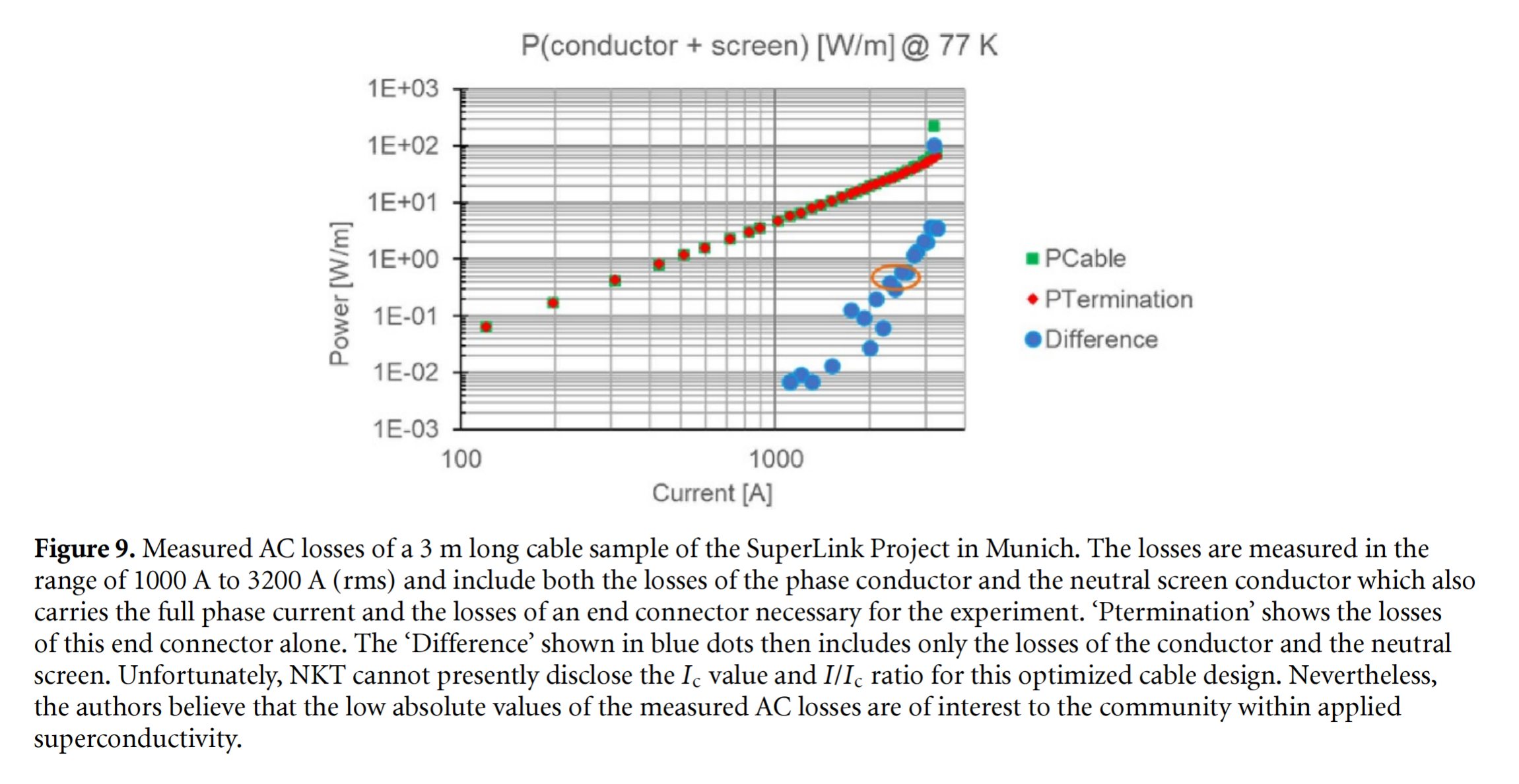
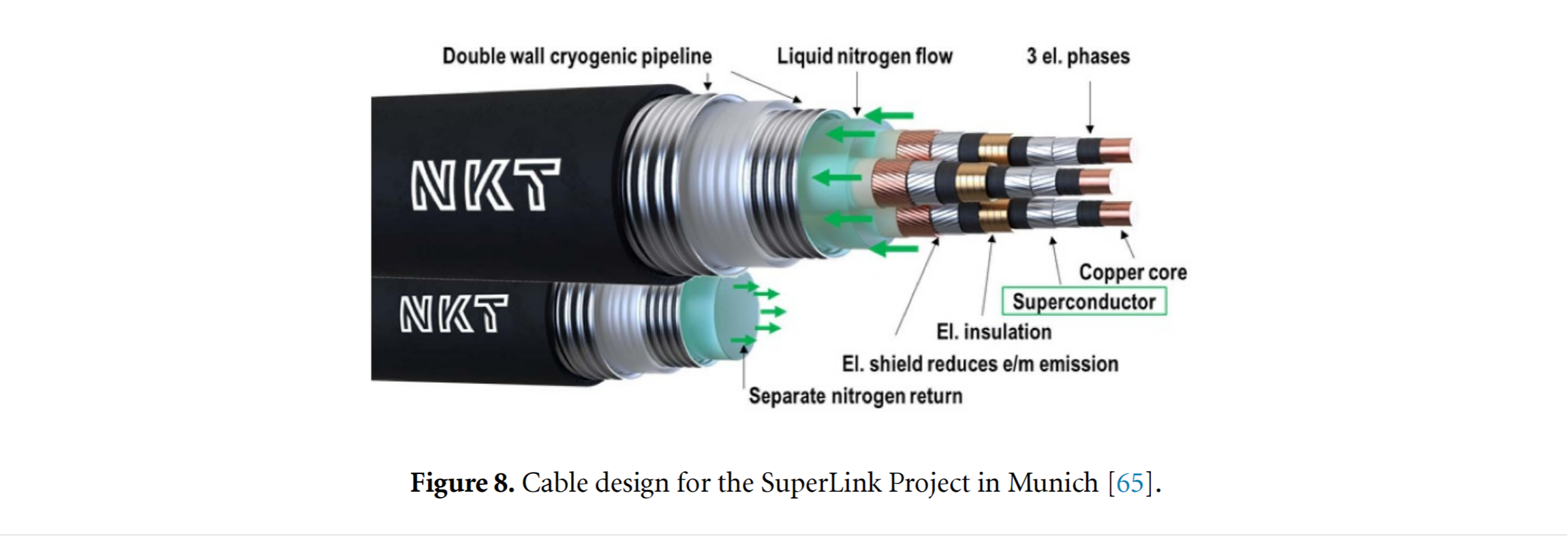
The most notable example is the planned "SuperLink" project, which aims to develop a 15 km long, 110 kV/500 MVA superconducting cable crossing the urban area of Munich, Germany.
4. Important breakthroughs in DC superconducting transmission technology
DC superconducting cables have no AC losses, making them more suitable for long-distance, large-capacity transmission, as well as for applications requiring high current and low voltage, such as data centres, rail transit, and the electrolytic industry.
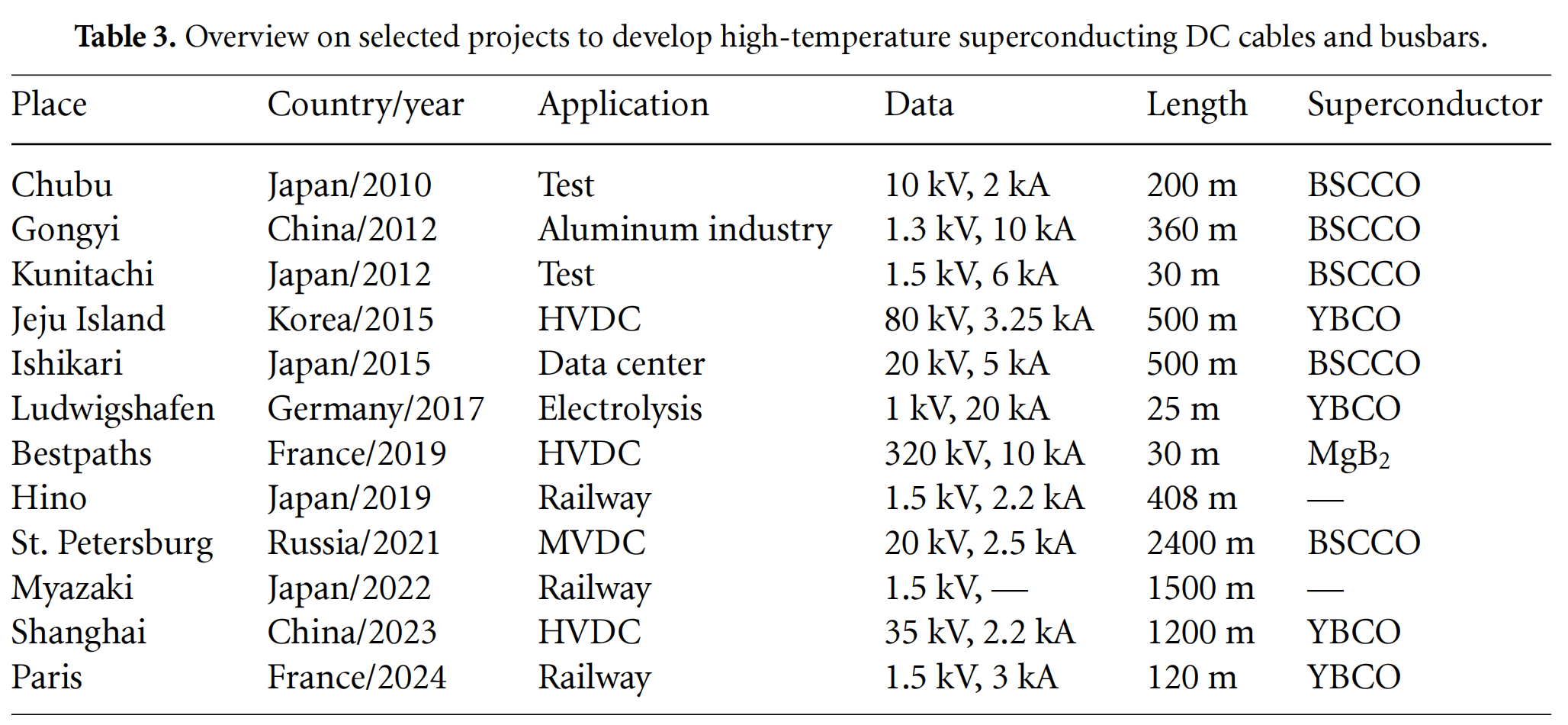
High-voltage DC (HVDC): the European Best Paths project completed type tests of a 320 kV/10 kA superconducting HVDC cable; on Jeju Island, South Korea, an 80 kV/3.25 kA demonstration line is in operation.
Long-distance record: a 20 kV/2.5 kA DC superconducting cable in Saint Petersburg, Russia, stretches 2.4 km and is currently the longest demonstration line.
High-current application: a 1 kV/20 kA DC superconducting cable for the electrolytic industry is operating in Ludwigshafen, Germany.
5. High-current busbar/cable applications for industry and data centres
In applications requiring extremely high DC currents, such as aluminium electrolysis, the chlor-alkali industry, and large data centres, superconducting busbars/cables can significantly save space, materials, and energy.

Industrial projects for high-current HTS busbars: German projects such as DEMO200 aim to develop a 200 kA superconducting DC busbar system for aluminium smelters.
Data centre power supply: in Ishikari, Japan, a 500-metre-long, 20 kV/5 kA DC superconducting cable has been built specifically to power a data centre.
Performance advantage: HTS DC busbar systems are able to conduct DC with extremely high current densities of more than 50 kA/cm2 and zero electrical losses.
6. Advancing electrification in aviation and rail transit
The high power density, light weight, and flexibility of superconducting cables make them an ideal choice for future electric aircraft and multi-megawatt traction power supply systems in rail transit.
Aviation application: in the Airbus ASCEND project, a 10-metre-long, 300 V/1700 A CORC(R) DC superconducting link weighing approximately 1.3 kg/m was successfully demonstrated, targeting a power rating of 500 kW and featuring fault current limiting capability.
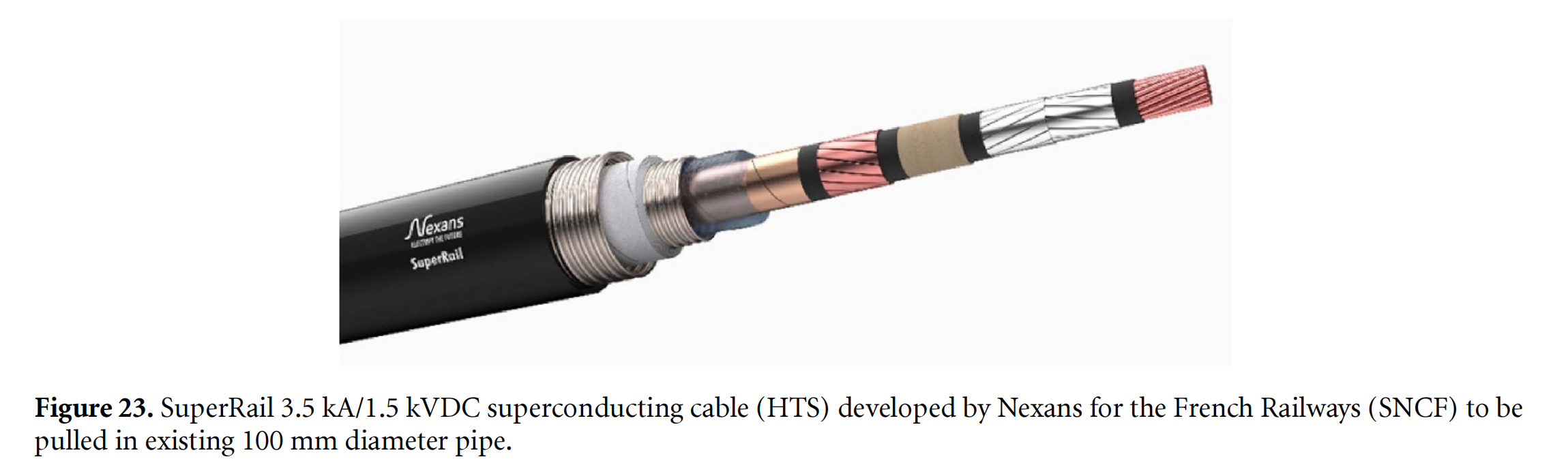
Railway feeding: the SuperRail project in Paris, France, deployed two 60-metre-long, 1.5 kV/3.5 kA DC superconducting cables to enhance the power supply at Montparnasse train station. In Japan, several field tests of superconducting feeding for 1500 V DC railway networks are also underway.
7. New cable designs have been developed and demonstrated for high-current power transmission
New cable designs, such as Conductor on Round Core (CORC(R)) cables, optimize current distribution, AC losses, and mechanical bending performance to meet the demanding requirements of various application scenarios.

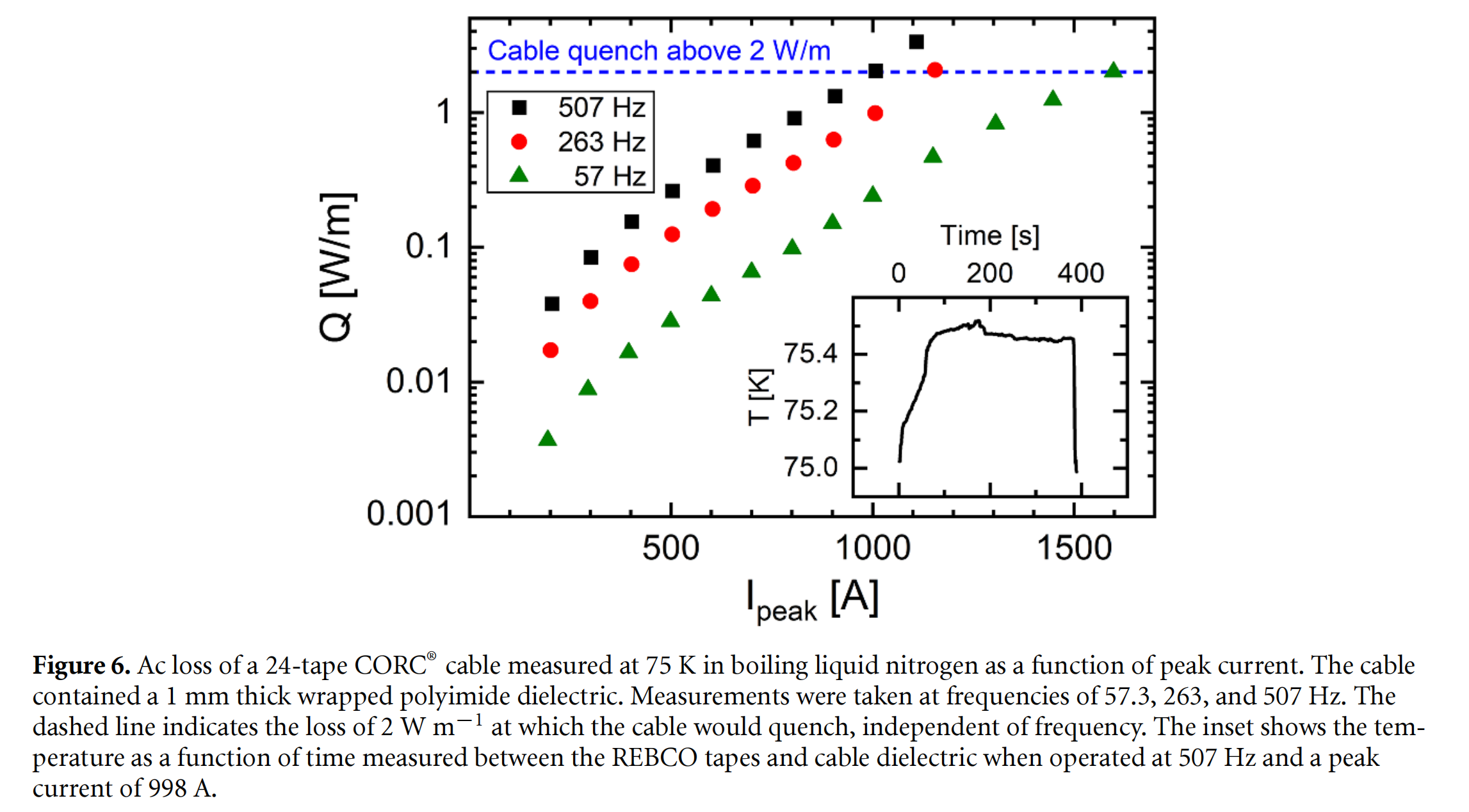
CORC(R) cable performance: the paper lists several CORC(R) designs. For example, a CORC(R) cable containing 48 REBCO tapes of 4 mm width achieves an operating current of 3.5-7 kA in liquid nitrogen at 68-77 K with a rated power of 10-20 MW. At 30-50 K, the operating current reaches 14-28 kA, delivering 42-84 MW.
Flexibility: thinner CORC(R) tapes or wires can achieve bending radii of less than 0.1 metres, making them suitable for space-constrained environments.
8. Concept validation of hybrid energy pipelines (co-transmission of electricity with hydrogen/LNG)
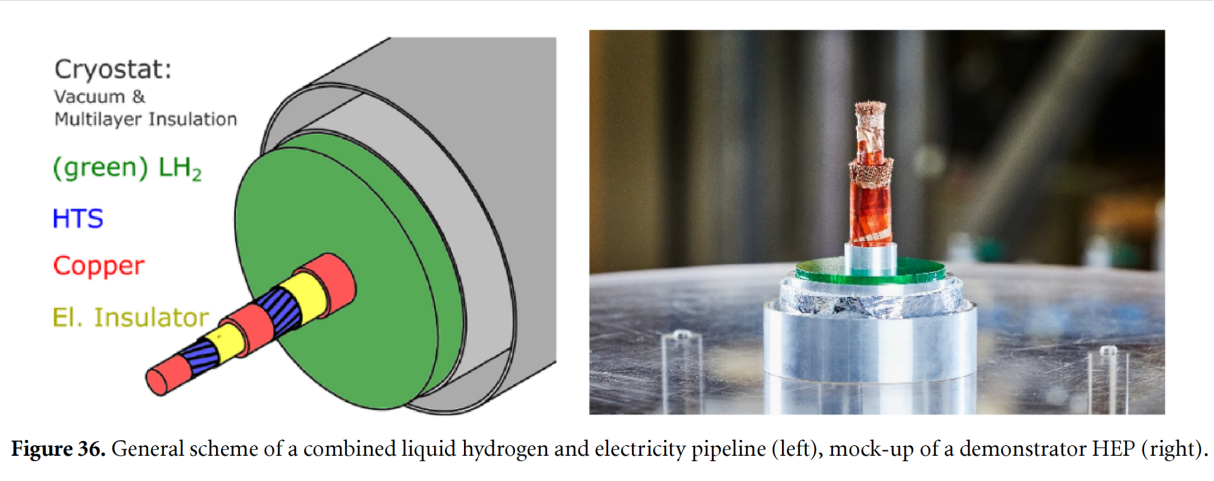
Combining superconducting cables with pipelines carrying liquid hydrogen (LH2) or liquefied natural gas (LNG) enables the simultaneous and efficient transmission of electrical and chemical energy carriers, offering a forward-looking technology for future integrated energy systems.

Electricity-hydrogen co-transmission: the paper proposes a hybrid energy pipeline concept combining MgB2 superconducting cables with LH2 pipelines and provides design parameters for a potential application: length 10 km, nominal electrical power 0.2 GW (+/-10 kV, 10 kA), nominal hydrogen transmission power 0.2 GW.
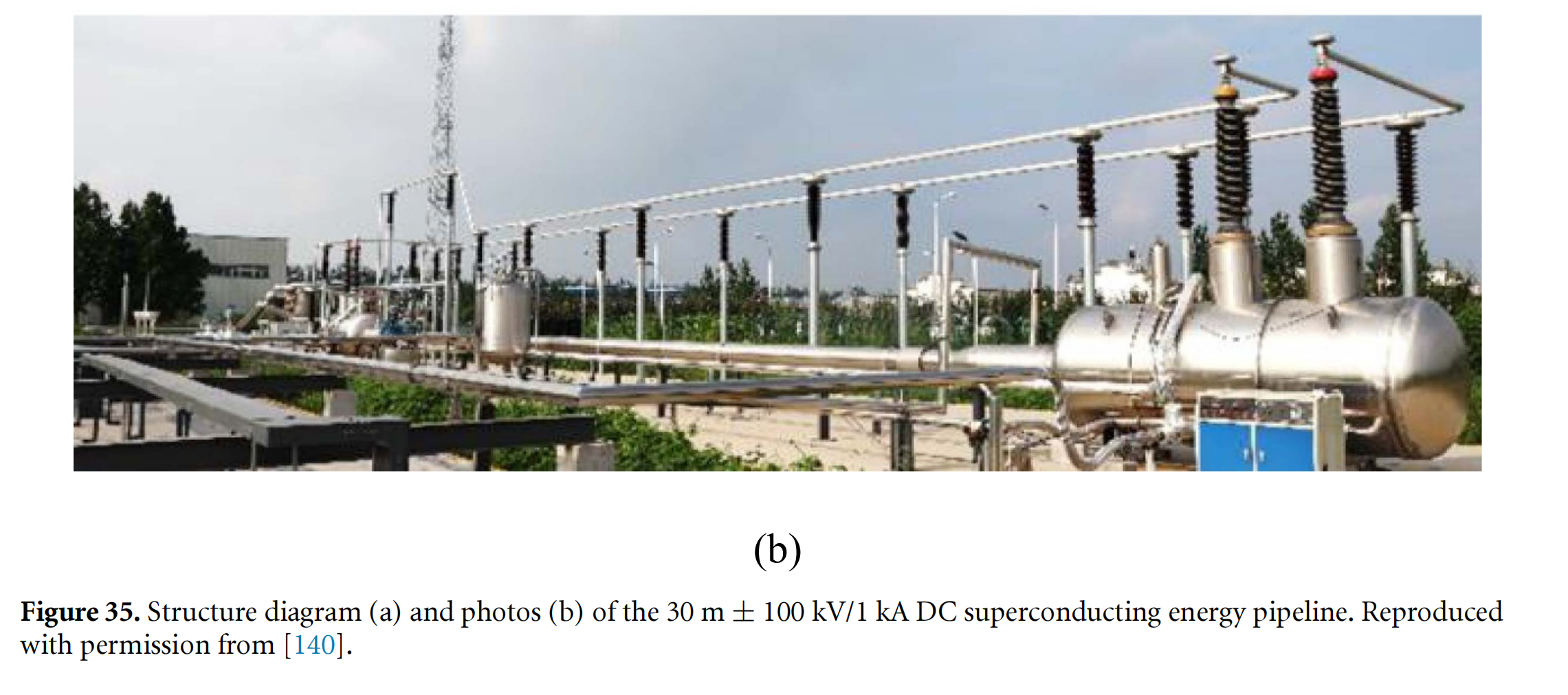
Electricity-LNG co-transmission: China has already carried out prototype development of superconducting energy pipelines that simultaneously transmit LNG and electric power.
9. Overhead superconducting transmission lines (O-SCTLs) expand new application scenarios
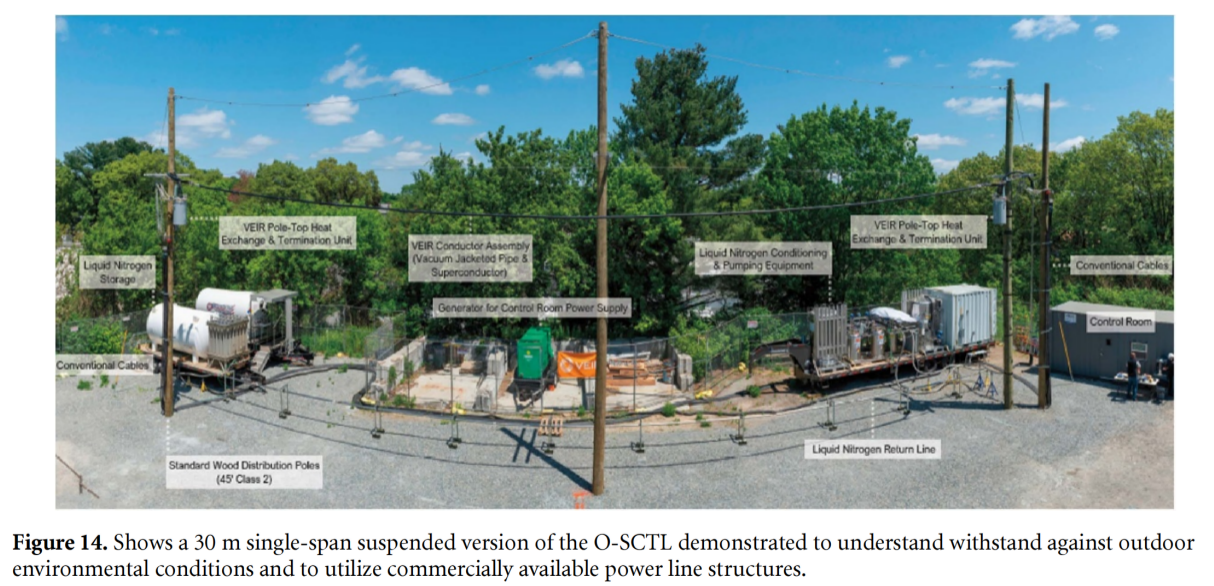
By placing superconducting cables in an overhead cryostat, the capacity of existing transmission towers can be greatly increased without significantly widening the corridor, or ultra-high power can be delivered at lower voltage levels. This offers a new solution to congested transmission corridors.
Positive implications: O-SCTLs have the potential to alleviate grid congestion and enable large-scale renewable energy integration with lower installation costs compared to underground deployment, reduced environmental impact, and shorter permitting cycles.
10. Standardisation and long-term operating experience drive commercialisation
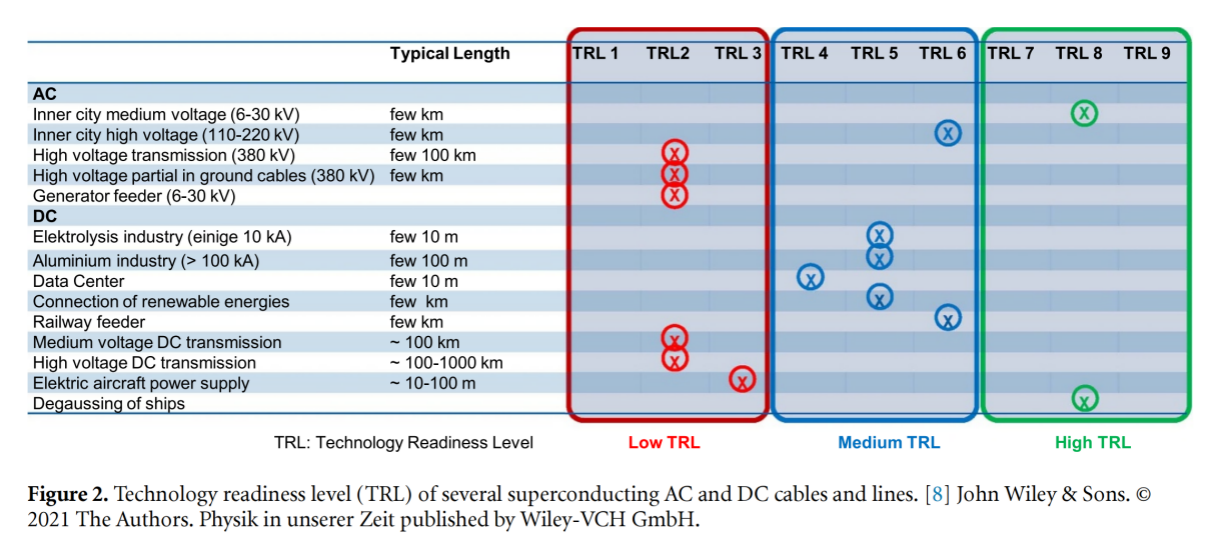
The development of international standards such as IEC 63075, together with several demonstration projects operating continuously without failure for many years, has proven the technical reliability of superconducting cables, strengthened the confidence of grid operators, and is now pushing the technology from demonstration towards commercialisation.
Long-term operating record: the AmpaCity cable in Essen, Germany (10 kV, 2.4 kA, 1 km), originally planned for two years of operation, was extended to seven years due to its excellent performance, during which it was treated as a conventional grid asset.

Standards and certification: IEC 63075 has become the testing standard for superconducting AC cables. New projects such as SuperNode's DC cable are undergoing qualification following procedures from bodies such as DNV, targeting TRL 6.
Commercialisation examples: South Korea's Shingal project and the subsequent Munsan project mark that superconducting cables have entered the stage of commercial procurement and operation. These projects have also begun evaluating novel grid architectures such as "superconducting substations."
Source: IOPscience Article
DOI 10.1088/1361-6668/ae15c2