Compact Fusion
Introduction
“Clean,” “safe,” and “inexhaustible”—nuclear fusion is considered the ultimate solution for human energy needs. Just one gram of fusion fuel can release 90,000 kilowatt-hours of electricity...
As the global demand for clean energy continues to grow, nuclear fusion, as one of the ultimate solutions for future energy, is attracting increasing attention.
According to the Fusion Industry Association (FIA)’s “Global Fusion Industry Report 2024,” the fusion industry has attracted over $7.1 billion in investment from 2021 to 2024. In 2024 alone, $900 million in new investments were added, with government funding increasing by 57% to $426 million. The number of private fusion companies worldwide has also risen to 45, with the United States taking the lead with 25 companies. The United Kingdom, Germany, Japan, and China follow closely behind.
Data released by the International Atomic Energy Agency (IAEA) shows that, as of 2024, there are 102 operational nuclear fusion devices globally, with 16 under construction and another 48 planned. In total, utility-owned fusion devices number 115, while privately led fusion devices total 51. Countries such as China, France, the United States, the United Kingdom, Germany, Japan, Russia, South Korea, Canada, the Netherlands, and India all possess experimental fusion devices.
In 2024, both public-public and public-private partnerships saw significant leaps forward. In the realm of public-public cooperation, Japan established the Fusion Industry Council (J-Fusion), and Europe formed the European Fusion Association. Following the establishment of a fusion energy strategic partnership between the UK and the US in 2023, the UK and Canada confirmed a new partnership in fusion energy in February. In April, the US Department of Energy (DOE) and Japan’s Ministry of Education, Culture, Sports, Science and Technology (MEXT) forged a strategic partnership. On the public-private cooperation front, notable initiatives include the US Milestone-based Fusion Development Program, Germany’s new “Fusion 2040” plan, Japan’s new “Fusion Moonshot” goal, and the UK’s new “Fusion Futures” program, all of which aim to invest in key technology providers. Based on these plans, public-private partnerships are being progressively established. EURO fusion and Fusion for Energy (F4E) jointly launched the European Fusion Technology Marketplace. The UK’s Tokamak Energy (TE) company is set to collaborate with the UK and US governments on two projects: the ST40 upgrade and the first fusion energy innovation project, LEAPS. The international organization ITER also announced its interest in public-private partnerships and intends to share knowledge directly with private fusion companies.
Significant progress has been made in the field of nuclear fusion research both domestically and internationally, and the commercialization process is also accelerating.
Since 2025, China has made several groundbreaking achievements in the field of nuclear fusion research. China's Experimental Advanced Superconducting Tokamak (EAST) achieved a new world record by sustaining a plasma temperature of 100 million degrees Celsius for 1,066 seconds, setting a new benchmark for high-confinement mode operation in tokamak devices. The new-generation device, “China’s HL-3” (HL-3), achieved a “double hundred million degree” parameter level for the first time, with ion temperatures reaching 117 million℃ and electron temperatures reaching 160 million℃. This milestone marks a significant step towards the engineering application of controlled nuclear fusion in China. Subsequently, HL-3 set another national record for fusion device operation by achieving a high-confinement mode (H-mode) with a plasma current of 1 million A and an ion temperature of 100 million ℃, resulting in a new high for the fusion triple product at the level of 10 to the power of 20. The large-aperture strong-field magnet, the Jing Tian magnet, independently developed by Energy Singularity, successfully completed its first round of current-carrying experiments, generating a magnetic field as high as 21.7T. This achievement sets a new record for the highest magnetic field in large-aperture high-temperature superconducting D-shaped magnets. The total assembly of the BEST (Break-even and Steady-state Tokamak) project has officially commenced, and upon completion in 2027, it will become the world’s first compact fusion energy experimental facility.
On the international front, France’s WEST device successfully sustained a hydrogen plasma for 1,337 seconds with a heating power as high as 2MW. Helion Energy in the United States plans to build the world’s first 50MW fusion power plant in Washington by 2028. Commonwealth Fusion Systems (CFS) in the U.S. has completed over 50% of the toroidal field magnets for its SPARC device, with the goal of achieving plasma operation by 2026. The company has also finished the site selection for its ARC commercial reactor, which is designed to power 150,000 homes. Germany’s Proxima Fusion has unveiled the world’s first “Stellaris” stellarator fusion power plant concept design. The UK’s STEP project has published a list of construction and engineering partners, marking a new phase for the STEP project.
Every step is reinforcing decades of technological breakthroughs and accumulation, and refining the grand vision of nuclear fusion.
The late Soviet physicist Lev Artsimovich, one of the inventors of the tokamak device, once said: “When society needs nuclear fusion, it will be ready.”
Project Cases
Compact Fusion — Commonwealth Fusion Systems (CFS), USA
CFS in the USA uses HTS tapes (wires) to wind large-diameter, 20T strong-field magnets for SPARC and ARC superconducting fusion applications. The first phase of the magnet was successfully tested in September 2021. In March 2024, CFS and MIT jointly published a paper, verifying the feasibility of superconducting magnets in commercial fusion applications.
Shanghai Superconductor has supplied more than 110 kilometers of ST-04-E high-performance HTS tape (wire) with 30-micron ultra-thin substrate for this project, used in the development of fusion conductors and magnets.
Compact Fusion — Tokamak Energy, UK
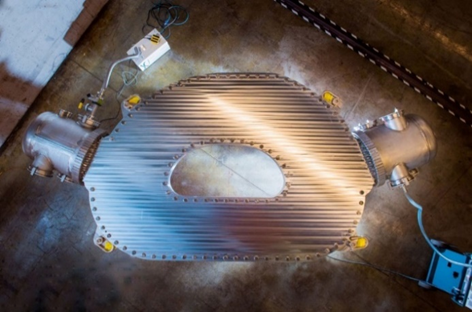
Tokamak Energy’s ST-40 spherical tokamak reactor reached the temperature of 100 million degrees Celsius in March 2022, marking a significant milestone in commercial nuclear fusion research. In February 2023, the DEMO4 magnet was completed and will be assembled and tested in the fusion power plant.
Shanghai Superconductor has been in deep cooperation with Tokamak Energy, supplying batches of wide high-performance HTS tapes (wires) from 2017 to 2020 for the development of strong-field magnets and superconducting controllable nuclear fusion.
Compact Fusion — Energy Singularity
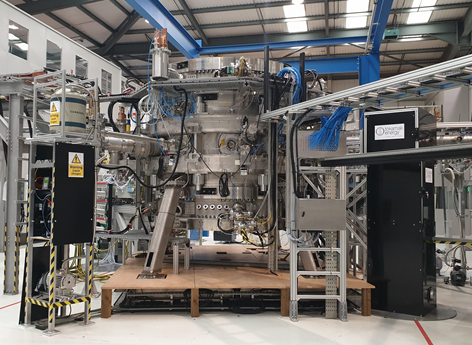
In June 2024, Energy Singularity successfully achieved the world’s first plasma discharge in a fully high-temperature superconducting magnetically confined fusion device, the HH70. This accomplishment marked the first global validation of the engineering feasibility of high-temperature superconducting tokamaks. In March 2025, Energy Singularity’s Jingtian magnet successfully completed its first round of current-carrying experiments, achieving a magnetic field strength of 21.7 T, setting a new record for the highest magnetic field strength in large-aperture high-temperature superconducting D-shaped magnets.
Shanghai Superconductor has maintained a close collaboration with Energy Singularity, establishing an excellent cooperation model. As a core material supplier, Shanghai Superconductor provided all the high-performance high-temperature superconducting tapes (wires) for the HH70 device and the Jingtian magnet.
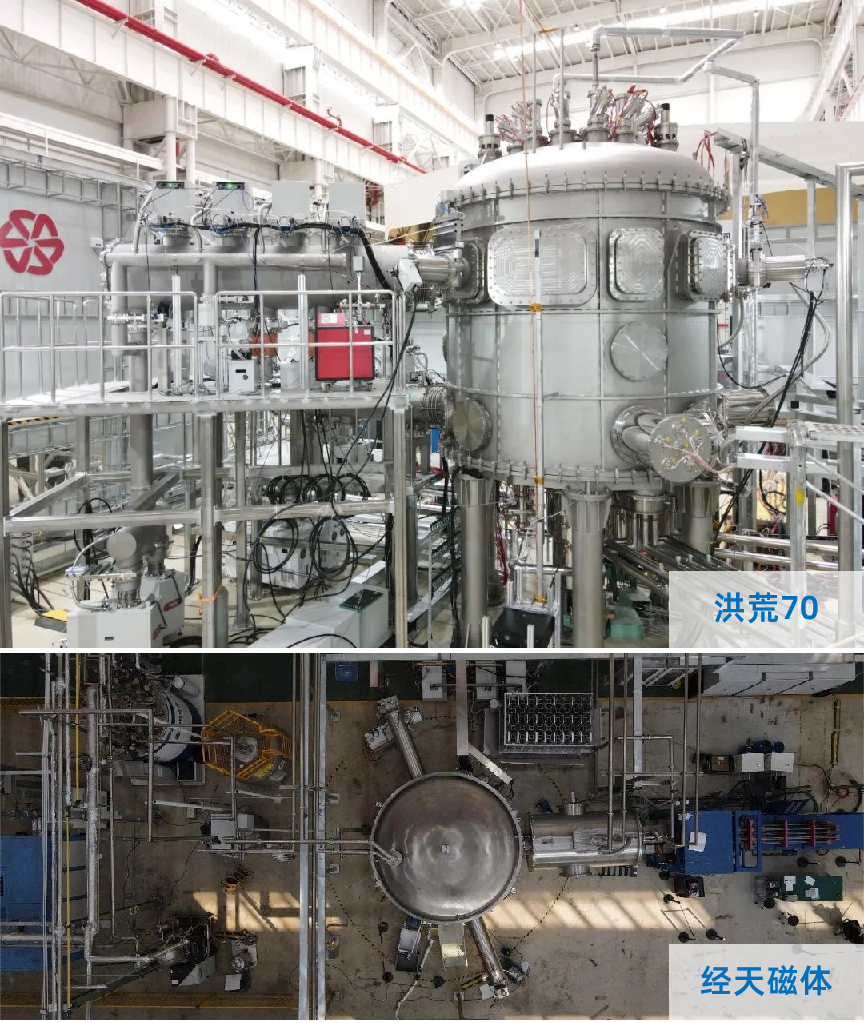
Controlled Nuclear Fusion Project — Startorus Fusion
In 2023, Startorus Fusion successfully developed the prototype of D-shaped HTS magnet, achieving a maximum field of 18T, which is the highest field strength reported domestically for D-shaped magnets. In 2024, the company independently developed a monitoring and protection system for high-temperature superconducting magnets. The SH-150 Helmholtz magnet provides a uniform magnetic field with an aperture of 150 mm, laying the foundation for the manufacturing and testing of the first toroidal field magnet for a fusion-grade spherical tokamak.
Shanghai Superconductor has closely collaborated with Startorus Fusion, supplying high-performance high-temperature superconducting tapes (wires) in bulk for the winding of high-temperature superconducting coils.
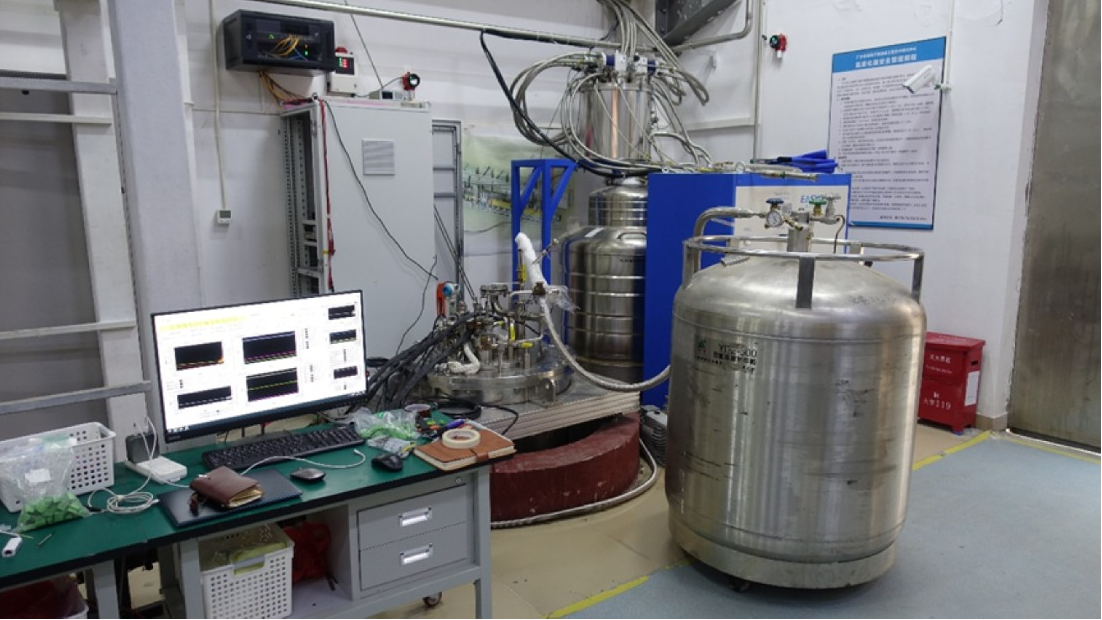
China's First 100-Meter High-Current HTS Conductors — China Southern Power Grid
In October 2025, China Southern Power Grid (CSG) has successfully developed two 100-meter high-current HTS conductors, based on CORC and TSTC respectively, and the conductors has passed all tests and acceptance checks.
The conductors carried 20 kA at self-field, liquid nitrogen temperature, and 50 kA at 15T, liquid helium temperature. Setting new records in HTS high-current conductor technology for both "maximum length and highest current capacity," this achievement marks a significant success in China's development of large-scale, high-current HTS conductors.
Shanghai Superconductor worked in close collaboration with CSG, supplying all HTS materials required for the project and playing a vital supporting role in the research and development of the sub-cables and conductors.
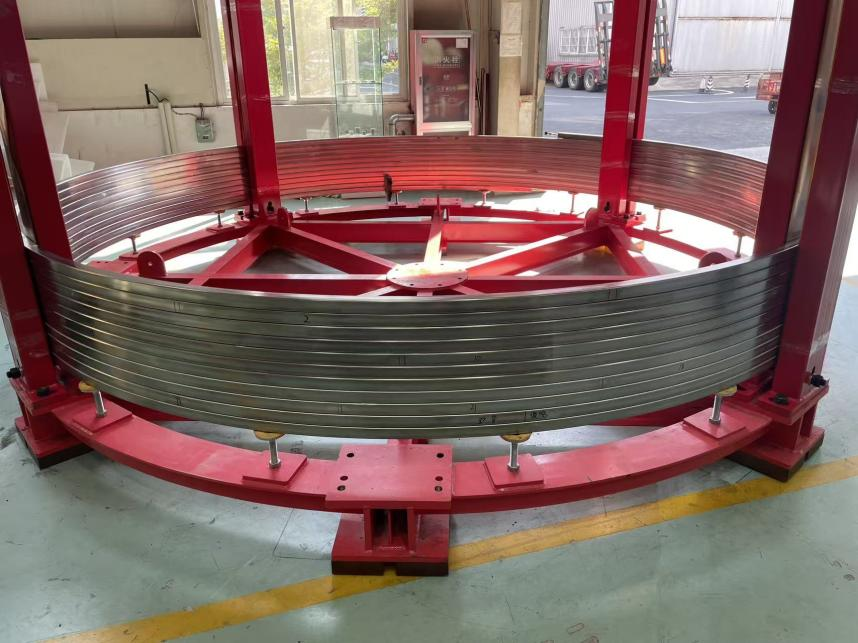
80 kA HTS CICC Prototype Conductor - ASIPP
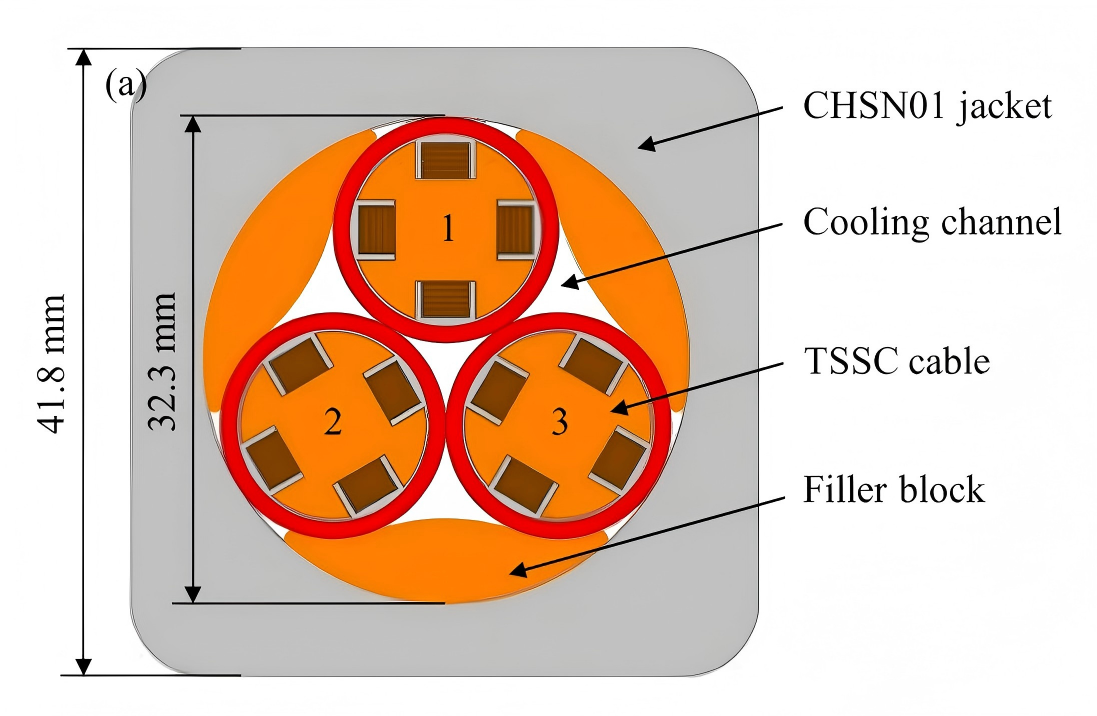
In 2026, the Institute of Plasma Physics and its collaborative research team has successfully developed and validated a REBCO Cable-in-Conduit Conductor (CICC) capable of carrying 80 kA under extreme conditions. A 2.8 m-long full-size prototype of a twisted stacked-tape (wire) rare-earth barium copper oxide (REBCO) CICC with a lateral support structure was designed, fabricated, and tested at the SULTAN facility. All REBCO HTS tapes (wires) (wires) used in the conductor were supplied by Shanghai Superconductor Technology Co., Ltd (SST), once again demonstrating the robust and reliable performance of the company's tapes (wires) under fusion-relevant operating conditions.
Under repeated electromagnetic cycling at currents up to 75-80 kA and a background field of 10.85 T, the Tcs remained stable at 23.2 K, demonstrating the excellent tolerance of this conductor structure to high electromagnetic loading. To date, this is the first TSTC-type HTS CICC to operate stably under electromagnetic loads of 830 kN/m being reported in a journal article, and thus provides a valuable experimental reference for future high electromagnetic load fusion magnet development.